
Cell Banking+
Building on CCRM’s regenerative medicine legacy and powered by OmniaBio’s purpose‑built GMP manufacturing, we enable a fully integrated journey from cell line development through Phase I/II/III and commercial scale.
With proven GMP success across iPSC, primary, and immortalized cell lines, we work with clients to deliver derisked development pathways, operational confidence, and analytics‑supported GMP readiness at every stage, making us the ideal partner for cell banking.
- Access to in‑house experts for technical guidance and program planning
- Templated GMP documentation for seamless transition into later stage
- Support that’s tailored to the scientific and operational needs of your therapy
Operational Excellence
95+ batches
(50 adherent; 34 iPSC; 45 suspension )
94% batch success rate
100% sterility track record
Scale & Yield Achievements
70+ Litres per batch
suspension culture
40× CellStack‑10 per batch
~80 L adherent culture
13B+ cells/batch
1000+ vials/batch
Fill & Finish Capabilities
Automated
Cryovials: 500 vials/20min
Semi-Automated
Crimp AT vials: 180vials/hr
Bag fill & finish available
Standardization & Tech Transfer
Templated documentation for rapid onboarding
Single or multi-suite synchronized manufacturing options
Of Experience in Stem Cell Banking
Cell Bank Batches Manufactured, Adherent & Suspension Types
GMP Cell Bank Batches Across Various Cell Types
On Average For Client-Specific Cell Bank Manufacturing & Release
More Than a Facility
An Ecosystem of CGT-Focused Capabilities
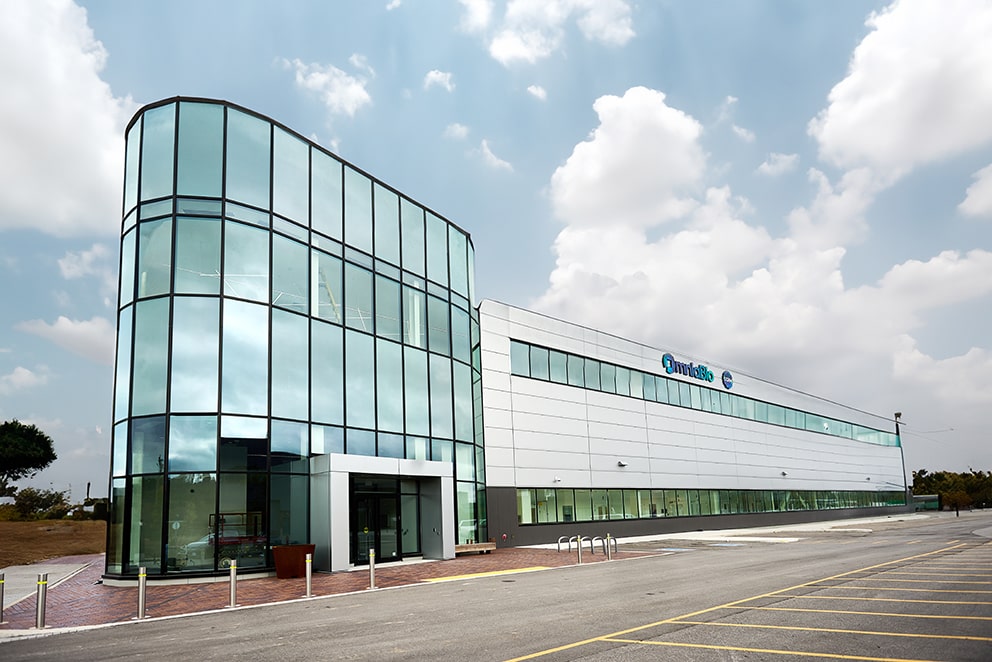
OmniaBio is the latest addition to a vibrant CGT ecosystem. Launched through the technical excellence and established infrastructure of CCRM, the focus of OmniaBio spans from preclinical, process and analytical development through to commercial manufacturing. With deep expertise in iPSC, lentiviral vector (LVV) and immune cell-based therapeutic scale-up, we are focused on the success of next-generation therapeutics from early clinical stage through to launch, all within one organization. Our consolidated offering saves you time and reduces the risk of transferring your products for launch and commercialization.


Experienced Leadership
Our leadership… Anytime, anywhere.

Chief executive officer
Michael May

LVV
Jessica Tate

Hanrong Wu

Hong Chang

Demonstrated Expertise in Cell Banking
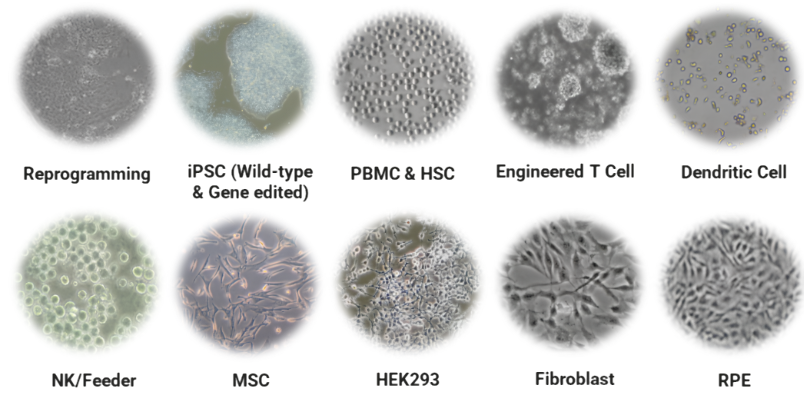
With over a decade of experience and 80+ successful batches, our experts excel in iPSC reprogramming and cell banking, adherent cell expansion (serum and serum-free), suspension expansion, and differentiation/expansion of diverse cell types, including, but not limited to:
- GMP: iPSC, K562, T cells, dendritic cells (DC), MSC, PBMC, HSC, Cord blood mononuclear cells (CBMNC), fibroblasts
- PD: In addition to the above, NK cells, iPSC-derived cardiomyocytes, iPSC-derived smoothen muscle cells, fibroblasts, iPSC-derived neuro progenitor cells (iNPC), Dopaminergic neuron, iPSC-derived pancreatic beta cell

Collaboration-First Approach: Your Goals, Our Focus
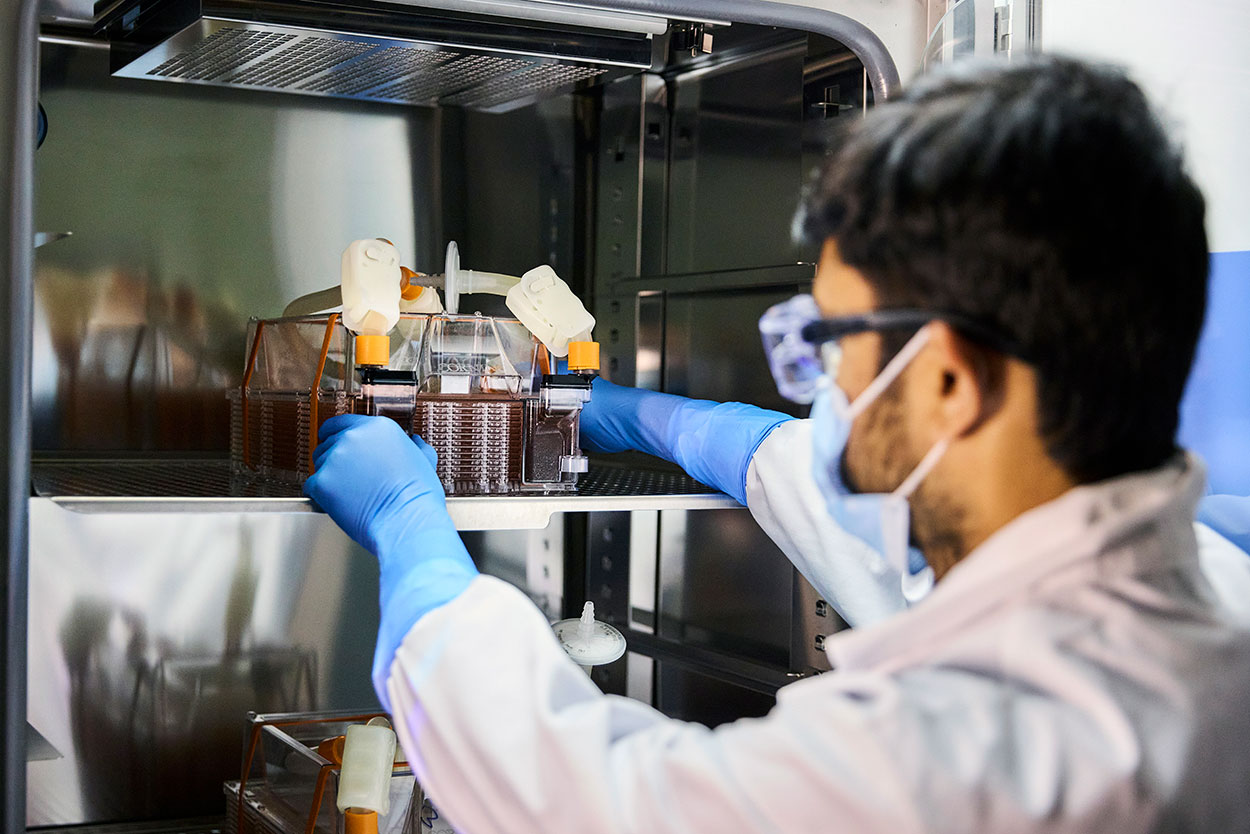
At CCRM and OmniaBio, we are committed to working with our clients to fully understand their program specifics, timelines, and constraints so that we can ensure timely therapeutic delivery.
That is why our integrated development and MSAT teams not only create robust, scalable, customized process workflows at reduced costs but also help you select the right manufacturing platform upfront to mitigate delays and accelerate your cell therapy program.
Cell Therapy Analytical Development and Testing
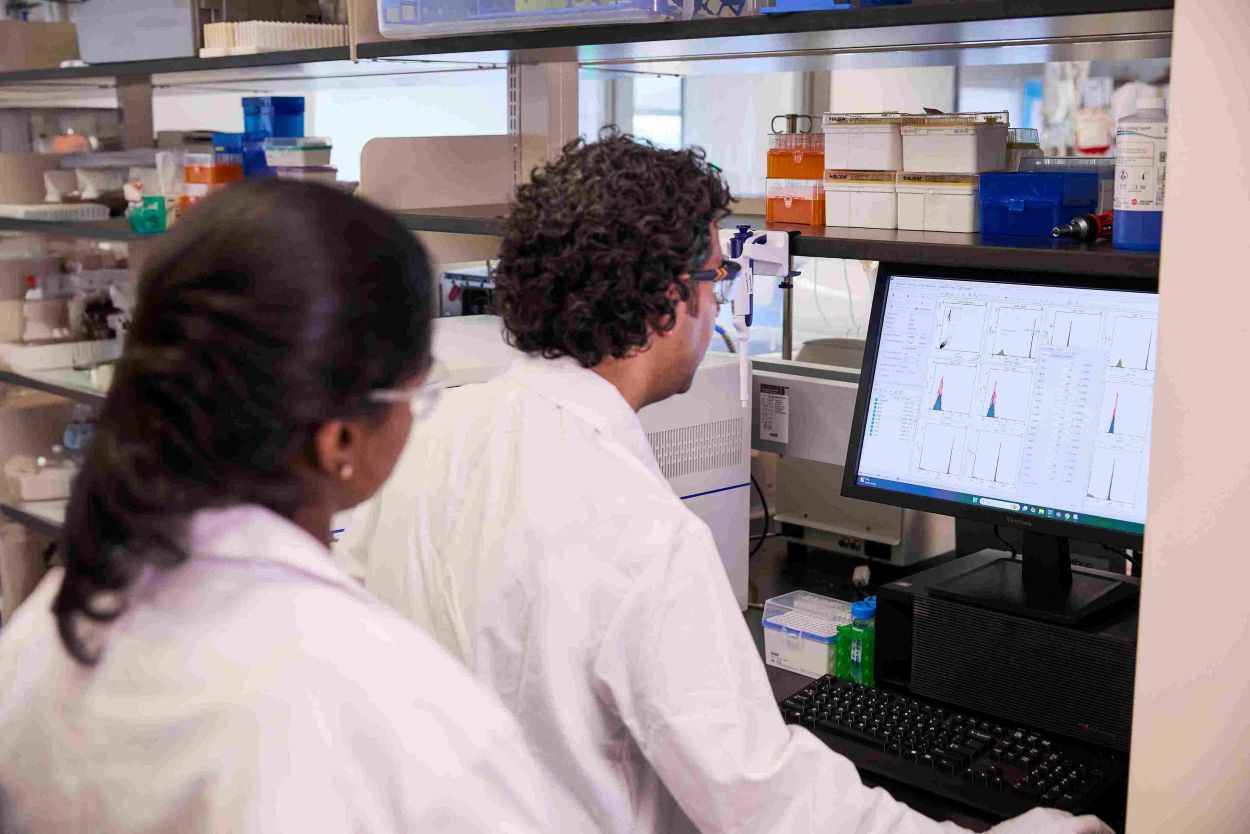
Delivering consistent and reproducible CGTs quickly requires adapted analytical techniques and timely QC release. At OmniaBio, we combine phase-appropriate analytical methods, custom assay development, and QC testing under one roof to accelerate time-to-market without compromising quality.
Standard Assays
Successful Projects
Analytical and QC Capabilities
Case Study: Translating Complex Cell Culture Processes into GMP-Ready Manufacturing
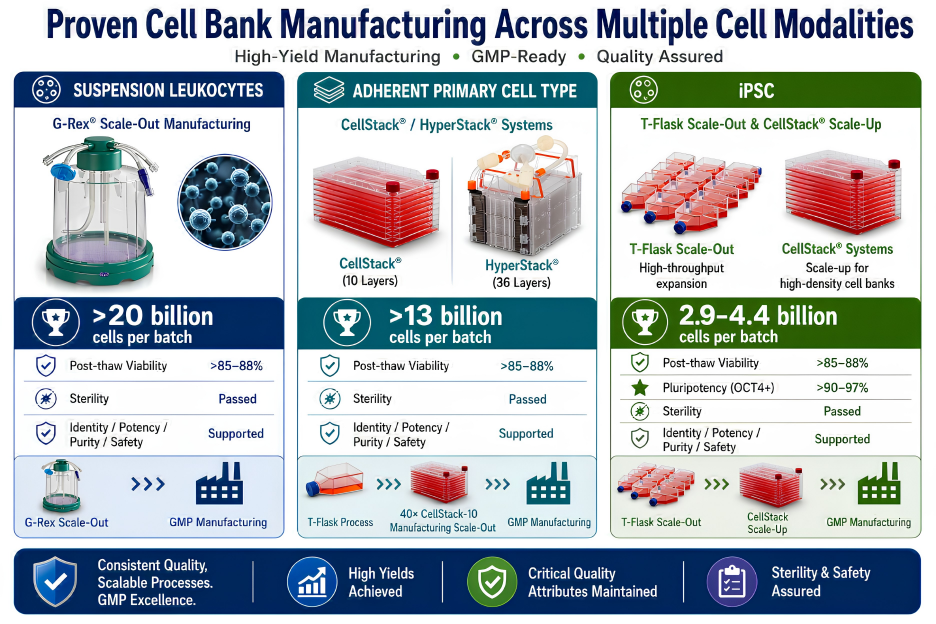
Cell banking programs often reach a critical CMC inflection point when early development processes must be translated into reproducible, GMP-ready manufacturing operations without compromising identity, potency, purity, safety, viability, or sterility expectations. Across multiple anonymized programs involving suspension leukocytes, adherent primary cell types, and induced pluripotent stem cells, CCRM and OmniaBio supported clients facing high single-batch yield requirements, limited at-scale process characterization, and constrained development timelines. By applying platform process knowledge, structured technology transfer, raw material risk assessment, in-process monitoring, and disciplined GMP execution, the teams established manufacturing approaches capable of supporting robust cell bank production across diverse cell types and culture formats.
Go Beyond The Bank
Capabilities extend beyond banking to support end‑to‑end development, including clonal line creation with automated single‑cell seeding, IND‑enabling gene editing, iPSC differentiation and scale‑up, toxicology material production, viral bank manufacturing, and rapid tech transfer into GMP. To further de‑risk and accelerate programs, GMP‑compliant off‑the‑shelf iPSC lines, a suspension HEK293 cell line, and an LV‑producer cell line are available.
Cell Banking Strategy: How Early Decisions Influence the Success of Cell Therapy Manufacturing
Cell banking is often viewed as a discrete technical activity: a master cell bank is established, tested, stored, and subsequently used to support manufacturing. In practice, however, cell banking is more accurately understood as a strategic decision that influences nearly every stage of product development.
The characteristics of the starting cell bank can affect process development, analytical comparability, manufacturing consistency, regulatory strategy, technology transfer, supply planning, and eventual commercialization. While cell banking is frequently completed early in development, the consequences of those decisions may not become apparent until years later.
For cell therapy developers, particularly those working with induced pluripotent stem cells (iPSCs), mesenchymal stromal cells (MSCs), and engineered immune cell platforms, it is worth evaluating not only how a cell bank is created, but whether the banking strategy is aligned with the long-term objectives of the program.
Why Do Cell Banks Matter Beyond Regulatory Compliance?
Many early-stage companies approach cell banking as a regulatory requirement. Regulators expect control over starting materials, traceability, characterization, and consistency between manufacturing campaigns. A properly established master cell bank supports these requirements. However, the more important question is whether the bank can support the future state of the product. A cell bank established to support Phase I clinical manufacturing may not be optimal for:
- Large-scale manufacturing
- Global commercial supply
- Multi-site manufacturing
- Future process changes
- Automation initiatives
- Product lifecycle management
The challenge is that these requirements often emerge after the bank has already been established. Consequently, sponsors should ask:
If this therapy is successful, can the current banking strategy support commercial demand five to ten years from now?
When Should a Master Cell Bank Be Established?
Conventional wisdom suggests companies should establish a GMP master cell bank as early as possible. The answer is often more nuanced. Banking very early may reduce immediate development risk, but it can also lock sponsors into cell lines, manufacturing conditions, or characterization packages that are later found to be suboptimal.
Waiting too long introduces a different set of risks:
- Limited material availability
- Comparability challenges
- Re-establishing source materials
- Delayed clinical timelines
The most effective approach is often to establish banking activities when:
- The cell substrate is reasonably stable
- Critical quality attributes are becoming understood
- Process development has progressed sufficiently to support future scalability
The goal should not simply be GMP compliance. The goal should be creating a starting point capable of supporting the anticipated evolution of the product.
What Makes Cell Banking Particularly Important for iPSC Programs?
Among advanced therapy products, iPSC-based therapies place particularly high demands on banking strategy. Unlike many autologous therapies, iPSC platforms frequently depend on a single source population that may ultimately support treatment of thousands or potentially millions of patients. As a result, developers must consider:
Genetic Stability
Can the cells maintain genomic integrity over extended expansion and storage periods?
Scalability
Can the banking strategy support future manufacturing demand without requiring replacement of foundational banks?
Differentiation Consistency
Will cells derived from the bank exhibit predictable behavior across manufacturing campaigns?
Long-Term Characterization
Will future regulators, partners, and investors remain confident in the characterization package supporting the bank? The significance of these questions increases as programs move toward allogeneic manufacturing models.
What Are the Most Common Cell Banking Risks That Sponsors Overlook?
Insufficient Bank Size
A bank may support immediate clinical requirements but lack sufficient inventory for future commercial manufacturing. This issue may only emerge years after the original banking campaign.
Incomplete Characterization
Analytical methods frequently evolve throughout development. Sponsors sometimes discover that historical testing packages do not adequately answer later regulatory questions.
Manufacturing Platform Mismatch
Early banks may be established using processes that differ substantially from eventual manufacturing platforms. This situation can create comparability concerns during later development stages.
Technology Transfer Complexity
Organizations often focus on how to create a bank but devote less attention to how the associated knowledge will be transferred across sites, teams, or manufacturing partners.
Should Cell Banking Strategies Be Designed Around Commercialization?
Many organizations intentionally avoid discussing commercialization during early development. There are understandable reasons for this approach.Clinical success remains uncertain. Capital may be limited. Development priorities change rapidly. Nevertheless, commercialization assumptions often influence successful banking strategies. Questions worth considering include:
- What annual patient volume might eventually be required?
- Could multiple manufacturing sites be necessary?
- Will global supply be required?
- Could automation become important?
- Is expansion into additional indications anticipated?
Even if precise answers are unavailable, these discussions often expose risks that would otherwise remain hidden.
How Does Automation Change Cell Banking Requirements?
Automation is increasingly viewed as a solution for reducing variability and improving manufacturing consistency. However, automation does not begin when equipment is installed. Automation often begins with the material entering the process. A bank that demonstrates consistent growth characteristics, viability, recovery, and performance may be better positioned for automated manufacturing workflows. Sponsors increasingly evaluate whether their banking approach will support:
- Closed-system processing
- Digital manufacturing workflows
- Automated expansion systems
- Scalable allogeneic manufacturing models
Banking strategies that anticipate future process automation may reduce redevelopment efforts later in the program lifecycle.
Is Geography Relevant When Selecting a Cell Banking Partner?
Geography is often discussed in terms of logistics and transportation. The more important consideration may be ecosystem strength. Sponsors evaluating banking partners frequently assess:
- Scientific expertise
- Regulatory experience
- Workforce availability
- Academic connections
- Manufacturing infrastructure
- Long-term political and economic stability
Why Are Some Sponsors Increasingly Looking at Canada?
Canada occupies a unique position within the cell and gene therapy sector. The country has a long history of stem cell research, access to highly trained scientific talent, strong academic institutions, and a growing advanced therapies manufacturing ecosystem. For organizations pursuing long-term platform development, an important consideration is not simply where a bank can be created, but where manufacturing capabilities, quality expertise, and technical talent are expected to continue growing over the next decade. From that perspective, Canada is increasingly being evaluated not only as a location for development activities, but as a strategic manufacturing jurisdiction capable of supporting global advanced therapy programs.
Key Takeaway
The most important question in cell banking is:
“What future are we designing this bank to support?”
The strongest banking strategies are those that connect today’s technical decisions with tomorrow’s manufacturing reality. For cell therapy developers, particularly those pursuing scalable iPSC, MSC, or allogeneic platforms, cell banking is less a manufacturing task and more a foundational strategic decision that shapes the trajectory of the entire program.
Frequently Asked Questions About Cell and Gene Therapy Manufacturing
How early can OmniaBio support my therapy development program?
OmniaBio can support programs at virtually any stage of development, from early proof-of-concept through commercial manufacturing.For early-stage developers, we often engage when a process is still being optimized or has only been demonstrated at small scale. For later-stage clients, support may begin during Phase I, Phase II, or even Phase III planning.Our product lifecycle approach allows us to assess where your program stands today and build a development and manufacturing strategy that aligns with your clinical and commercial goals.
What makes OmniaBio different from a traditional CDMO?
Many CDMOs focus primarily on providing manufacturing capacity. OmniaBio takes a partnership-driven approach that combines process development, technical expertise, GMP manufacturing, and commercialization planning.
Rather than simply executing an existing process, our experts work collaboratively with clients to:
- Improve process robustness
- Reduce manufacturing risk
- Enhance product quality
- Identify potential scale-up challenges
- Lower future cost of goods
- Support long-term commercialization objectives
Our goal is not only to manufacture your therapy, but to help it succeed throughout its lifecycle.
How do you help clients prepare for future clinical and commercial stages?
From the earliest stages of development, we evaluate decisions through the lens of future manufacturing requirements.
This includes assessing:
- GMP readiness
- Raw material sourcing strategies
- Process scalability
- Regulatory considerations
- Technology transfer requirements
- Commercial manufacturing feasibility
By addressing these factors early, we help clients avoid costly redevelopment and reduce delays as programs advance through clinical development.
Why is lifecycle planning important in cell and gene therapy manufacturing?
Many therapies encounter challenges when moving from development into GMP manufacturing or later-stage clinical production.
Lifecycle planning helps ensure that:
- Development decisions support future scale-up
- Critical quality attributes are maintained
- Manufacturing risks are identified early
- Regulatory expectations are considered from the outset
- Processes remain scalable and cost-effective
At OmniaBio, lifecycle thinking is built into every stage of client engagement.
How does OmniaBio support technology transfer and scale-up?
OmniaBio operates within an integrated ecosystem designed to support therapies as they progress through clinical development.
Our facilities are optimized for different stages of the product lifecycle, enabling a structured approach to technology transfer and scale-up. This continuity helps ensure that process knowledge is retained and that manufacturing strategies remain aligned as clinical demand grows.
What expertise does OmniaBio bring to cell and gene therapy manufacturing?
Our team includes experts across:
- Cell therapy development
- Gene therapy manufacturing
- Process development
- Manufacturing sciences and technology (MSAT)
- GMP operations
- Process engineering
- Quality and compliance
Many team members bring more than 15 years of specialized cell and gene therapy experience, allowing us to support complex manufacturing challenges across multiple modalities.
What are the most common mistakes therapy developers make before manufacturing?
One of the most common challenges is optimizing solely for short-term development objectives without considering downstream manufacturing requirements.
Examples can include:
- Using materials that are difficult to source in GMP grade
- Designing inefficient manufacturing processes
- Overlooking scalability requirements
- Failing to identify future regulatory risks
- Underestimating fill-finish and storage considerations
Our teams conduct holistic process reviews to identify these risks before they become barriers to clinical advancement.
Why is manufacturing capacity only part of the equation?
In cell and gene therapy, success is not determined solely by facility size.
The most important considerations include:
- Process efficiency
- Operational flexibility
- Cost of goods
- Quality systems
- Technical expertise
- Scale-appropriate manufacturing strategies
A larger facility does not automatically deliver better outcomes. The right manufacturing environment is the one that supports product quality, operational efficiency, and clinical objectives.
What cell banking capabilities does OmniaBio offer?
OmniaBio provides comprehensive cell banking services designed to support a wide range of cell therapy programs.
Our team works closely with clients to evaluate:
- Cell type and characteristics
- Growth kinetics
- Manufacturing platform selection
- Scale requirements
- Clinical demand forecasts
- Future commercialization needs
This collaborative approach helps ensure cell banks are designed efficiently while maintaining the flexibility required for future development stages.
Can OmniaBio help scale a manufacturing process from research to GMP production?
Yes.
Many clients begin with research-scale or small-scale processes. Our platform technologies and manufacturing expertise allow us to support the transition from laboratory-scale production through clinical manufacturing while maintaining focus on quality, reproducibility, and cost efficiency.
What cell therapy manufacturing experience does OmniaBio have?
OmniaBio has extensive experience supporting diverse cell therapy programs and manufacturing platforms.
Our experience includes:
- Multiple cell types across various therapeutic applications
- Support for clients across multiple international jurisdictions
- Both 2D and 3D manufacturing processes
- Cell banking and scale-up development
- GMP manufacturing operations
- Fill-finish and cryopreservation services
This breadth of experience allows our teams to adapt solutions to the specific needs of each program.
Does OmniaBio offer fill-finish and cryopreservation services?
Yes.
Our capabilities extend beyond cell expansion and manufacturing to include:
- Aseptic fill-finish operations
- Cryopreservation process support
- Controlled-rate freezing
- Visual inspection
- GMP storage solutions
- Vapor-phase liquid nitrogen storage
By integrating these capabilities, we help clients maintain product quality from manufacturing through long-term storage and distribution.
How does OmniaBio help reduce manufacturing costs?
Cost reduction begins with process design.
Our teams work with clients to:
- Optimize manufacturing workflows
- Improve process efficiency
- Reduce labor requirements
- Minimize facility footprint requirements
- Identify scalable production strategies
- Avoid unnecessary process complexity
The result is a manufacturing approach designed to support both clinical success and long-term commercial viability.
What is the foundation of OmniaBio’s manufacturing success?
Our success is built on three core pillars:
Deep Technical Expertise
Specialized cell and gene therapy knowledge developed through years of experience.
Proven Operational Experience
Extensive manufacturing execution, technology transfer, and process optimization expertise.
Purpose-Built Infrastructure
Facilities, systems, and quality frameworks specifically designed to meet the unique demands of cell and gene therapy manufacturing.
Together, these elements enable us to deliver high-quality manufacturing solutions while remaining agile, collaborative, and focused on client success.